
Best Neighborhoods for Downsizing: A Comprehensive 2026 Guide
Downsizing in Central Florida has become a strategic move for many households approaching retirement, especially as maintenance costs and property taxes rise. According to U.S. Census Bureau data through 2024, adults aged 65 and older represent roughly 12.6% of Orange County’s population, a share expected to climb by 2026. This demographic shift is shaping demand in areas such as Lake Nona, Baldwin Park, Winter Garden, and Celebration, where smaller-footprint homes, townhomes, and condos are increasingly tailored for rightsizing lifestyles.
What Defines the Best Neighborhoods for Downsizing in 2026?
Downsizing-focused neighborhoods balance compact housing with strong everyday convenience. In Orlando, corridors near Lake Eola Park, Downtown Orlando, and the emerging Creative Village place residents within short distances of grocery stores, healthcare, and dining. According to Walk Score, Orlando posts a citywide walk score of about 41, but pockets such as Thornton Park and parts of South Eola reach the high 80s, significantly reducing reliance on driving. Such metrics matter for residents planning for limited mobility over the next 10 to 15 years.
Affordability and predictable ownership costs also separate suitable downsizing options from more speculative areas. Based on housing-market data through mid-2025 from Redfin, many Orlando neighborhoods feature condo and townhome prices clustered between $250,000 and $450,000, a range that often releases equity for longtime homeowners. Monthly association fees require careful review, yet those fees can offset exterior maintenance, roof replacement, and amenity expenses that might otherwise average several thousand dollars every 5 to 7 years.
On an early evening along Orange Avenue in Downtown Orlando, the glow from café windows reflects off the brick sidewalks, and the low murmur of conversation from sidewalk patios mixes with distant guitar music from a small bar near Lake Eola Park. The scent of roasted coffee from Craft & Common hangs in the air as passing LYNX buses release a warm diesel breath, giving the street a lived-in, urban texture that can appeal to downsizers seeking stimulation without overwhelming scale.
How Do Lake Nona and Baldwin Park Compare for Downsizing?
Lake Nona and Baldwin Park frequently appear on shortlists of the best neighborhoods for downsizing around Orlando because both combine walkability with medical access. Lake Nona Medical City, anchored by Orlando Health Lake Nona and the University of Central Florida’s Health Sciences Campus, concentrates several major healthcare providers within roughly a 2-mile radius. According to Niche 2025 rankings, Lake Nona scores highly for access to amenities and commute times, making it attractive for semi-retired professionals maintaining part-time careers.
Baldwin Park, situated just east of Downtown Orlando and adjacent to Blue Jacket Park, offers a more traditional neighborhood aesthetic. Townhomes and condos near New Broad Street provide front-facing retail such as restaurants and small markets, reducing daily travel. Housing data compiled through early 2025 by Zillow shows many Baldwin Park attached homes transacting in the approximate band of $400,000 to $650,000, reflecting premiums for lake views and walkable blocks. Smaller condos remain below those figures, still providing access to the same parks and trail system.
Morning walks around Lake Baldwin often begin with the soft crunch of gravel underfoot and the shimmering reflection of the sun on the water’s surface. Joggers pass beneath the oaks lining Lake Baldwin Lane as the smell of freshly baked bread drifts from Seito Sushi and nearby cafés on New Broad Street. The quiet splash of oars from rowers practicing with the Orlando Rowing Club reinforces the impression of a calm but active environment that suits many downsizing households.
Transit and connectivity also differ between the two neighborhoods. Residents in Baldwin Park benefit from relatively short drives along Corrine Drive and Colonial Drive to reach AdventHealth Orlando and the Mills 50 District. Lake Nona residents rely heavily on Narcoossee Road and State Road 417 for regional connections, but proximity to Orlando International Airport, roughly 10 to 15 minutes away in low traffic, simplifies travel for those with family spread across multiple states.
Why Do Winter Garden and Horizon West Appeal to Space-Sensitive Downsizers?
Winter Garden’s historic downtown, centered on Plant Street, blends small-town character with modern amenities. The West Orange Trail, running for about 22 miles according to TrailLink, passes directly through downtown, giving residents safe cycling and walking options. Many downsizing households choose single-story cottages and townhomes within a short distance of the Plant Street Market, where local vendors and weekend events provide social connection without extensive driving. That environment can reduce social isolation, a key concern as residents age in place.
Horizon West, southwest of Winter Garden near the intersection of State Road 429 and New Independence Parkway, offers more recently built housing stock. Planning documents summarized by Orange County indicate that Horizon West’s villages were designed with mixed-use centers, parks, and trail networks embedded from the start. Many attached homes and villas cluster around Hamlin Town Center, where grocery stores, restaurants, and a cinema sit within a few blocks of Lake Hancock. That configuration lets residents downsize into new construction while preserving access to suburban amenities and outdoor recreation.
Affordability trends in these western suburbs contribute to their popularity. Market observations compiled through mid-2025 by Redfin suggest that attached homes in the broader Winter Garden area often close between roughly $350,000 and $550,000, with Horizon West offering similar ranges depending on village and builder. Compared with some parts of Dr. Phillips or Windermere, those prices can leave six-figure equity unlocked for retirees transitioning from larger, paid-off properties in older neighborhoods like Conway or College Park.
How Do Celebration, Hunters Creek, and Kissimmee Serve Downsizing Goals?
South of Orlando, Celebration, Hunters Creek, and parts of Kissimmee attract residents seeking organized communities with smaller lots and strong association oversight. Celebration, developed near Walt Disney World, incorporates a traditional street grid with apartments, townhomes, and compact single-family homes surrounding Market Street. According to Walk Score, Celebration achieves a walk score in the mid-50s, higher than many surrounding suburbs, thanks to its town center, lakeside boardwalks, and trail system connecting neighborhoods like East Village and North Village.
Hunters Creek, adjacent to South John Young Parkway, emphasizes community amenities and organized recreation. The Hunters Creek Community Association maintains multiple parks, playgrounds, and walking paths, as noted in association documentation summarized in 2024 by Hunters Creek Community Association. Compact homes and townhomes cluster near Hunters Creek Elementary and Osprey Park, appealing to multigenerational households where grandparents downsize nearby but remain close to grandchildren attending local schools. That configuration can reduce cross-town travel along congested corridors such as Osceola Parkway and State Road 417.
Kissimmee and St. Cloud provide additional options for value-focused downsizers. Cost-of-living estimates compiled by Numbeo through early 2025 indicate that housing expenses in the Orlando–Kissimmee area run roughly 23% to 28% below those in major coastal metros like Miami. Townhomes near Shingle Creek Regional Park, Osceola Heritage Park, and Downtown Kissimmee’s Broadway corridor often offer modest monthly payments while keeping residents close to the SunRail station, AdventHealth Kissimmee, and lakefront recreation on Lake Tohopekaliga.
What Role Do Schools, Parks, and Transit Play in Downsizing Decisions?
Even for residents without school-age children, school quality can significantly influence resale value. GreatSchools ratings through 2025 show several strong-performing schools within these downsizing-friendly areas, including Lake Nona High, Celebration K-8, and Horizon High near Horizon West, with scores in the 7 to 9 out of 10 range, according to GreatSchools. Properties zoned for such institutions often command price premiums but may also hold value more reliably over 5- to 10-year horizons.
Parks and trails shape everyday quality of life as household size shrinks. Access to assets like Lake Eola Park, Blue Jacket Park, and Shingle Creek Regional Park offers low-cost recreation, which matters as fixed incomes become more common. As documented by the City of Orlando Parks Division, many neighborhoods within the city limits place residents within roughly a half-mile of a park or trailhead. That proximity can reduce transportation costs and encourage time outdoors, benefiting both physical and mental health during later life stages.
Transit also factors into long-term planning. LYNX bus routes and SunRail commuter rail stations in Downtown Orlando, Kissimmee, and Winter Park create alternatives to driving on congested corridors like Interstate 4 and State Road 528. According to ridership statistics summarized through 2024 by LYNX, core routes along Orange Avenue and John Young Parkway carry thousands of daily riders, indicating viable car-light lifestyles for some downsizers who prefer to reduce vehicle ownership from two cars to one, or even none, over the next decade.
The 12.6% share of older adults in Orange County cited at the start of this guide reflects a structural shift that will continue shaping housing demand through 2026 and beyond. That opening figure underscores how carefully selected downsizing neighborhoods can protect both lifestyle and long-term financial flexibility. The Orlando Regional Realtor Association market reports provide recurring insight into inventory levels and pricing pressures across these Central Florida submarkets. Buyers who register listing alerts through such resources and commit to touring preferred properties within 48 hours of listing, before the spring 2026 activity surge, are positioned to secure better-located, lower-maintenance homes. Households that delay those steps until after late summer often confront thinner inventory, stronger competition, and fewer opportunities to downsize on advantageous terms.
FROM OUR BLOG


First-Time Home Buyer Guide: What to Know Before You Buy
First-Time Home Buyer Guide: What to Know Before You Buy Entering the market as a first-time buyer involves far more than finding a favorite listing. According to National Association of Realtors data through 2024, first-time purchasers represent about 32% of recent home sales nationwide. That share
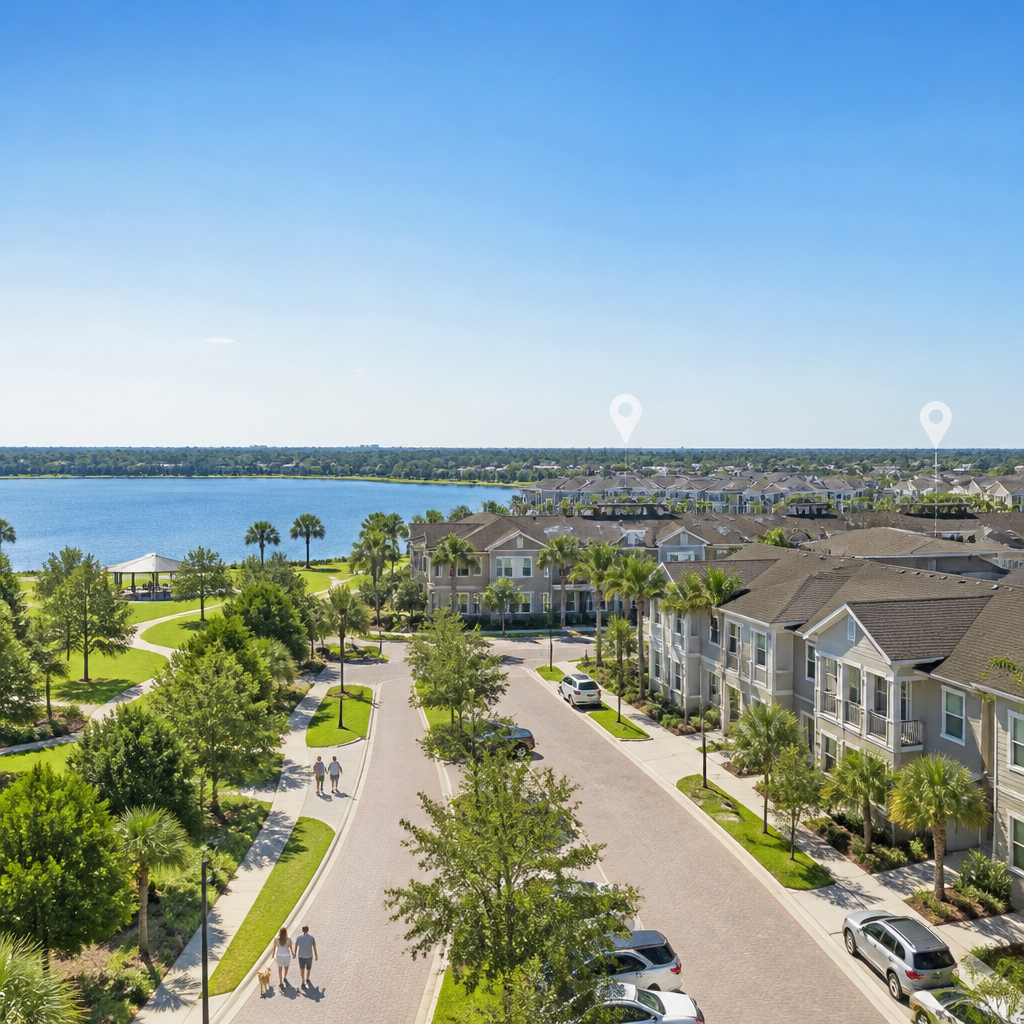
Top Downsizing Tips for Homeowners: Simplify Your Move in 2026
Top Downsizing Tips for Homeowners: Simplify Your Move in 2026 Downsizing in 2026 increasingly reflects demographic and financial shifts, with older-owner households projected to exceed 38% of all households by 2030, according to U.S. Census Bureau estimates. Many longtime owners in areas around Kis